Webservice on the WMS
A REST integration that lets the customer push batch changes straight into the WMS. No email exchanges, no manual middle step, no in-between delay.
For NedCargo, we built a webservice that lets a customer adjust batches of their own products directly in the WMS. No email back-and-forth, no manual middle step, with security as a hard precondition.



A customer of NedCargo wanted to be able to update batches of their own products themselves while those products were in storage at NedCargo. Until then, that ran via an email to NedCargo, after which the batch change was entered manually in the WMS.
It worked, but it took time. The lead time of a simple batch change depended on the availability of the NedCargo team. At the same time, it was something the customer could perfectly well do themselves, provided the WMS supported it.
The brief was concrete: a webservice that writes straight into the WMS, with sharp edges around what is and isn't mutable via the API, and with security as a starting point rather than an afterthought.
A REST integration that lets the customer push batch changes straight into the WMS. No email exchanges, no manual middle step, no in-between delay.
Strong authentication, scope isolation per customer, and an audit trail on every change. From the first sketch, security was a hard requirement, not a check after the fact.
Only batches of products that are freely available in the warehouse. Pallets that are blocked or already assigned to orders stay out of the webservice's reach.
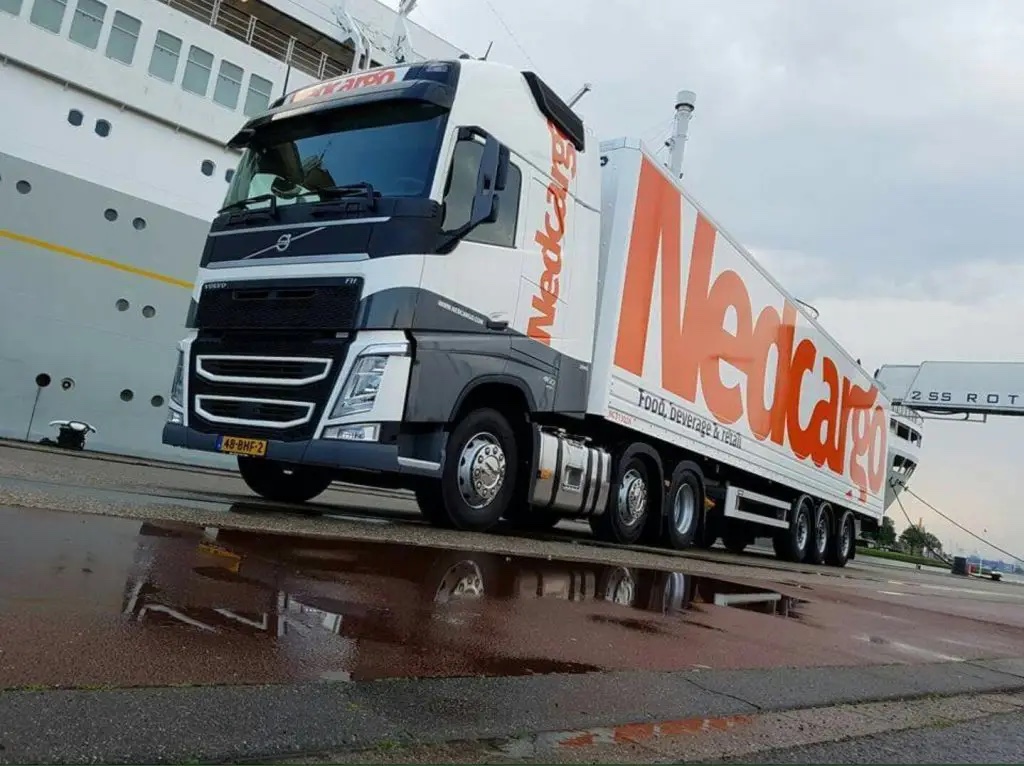
Behind the API sits an organisation with warehouses, routes, and people who keep the food, beverage, and retail chain in motion every day. A short look into the world of NedCargo.
The customer performs batch changes directly in the WMS, with no middleman. For NedCargo, that means less manual work on an action that no longer needs to add value. For the customer, it means peace of mind: a change is applied immediately, with the same reliability the WMS itself provides.
Services, locations, and the latest news from NedCargo, food logistics specialist.
From the first conversation, security was non-negotiable. Every choice in the API was made from that principle, from authentication to scope isolation.
Deep understanding of API design, paired with translating it into work in a WMS context. A shared language that kept the pace of the project.
No noise, quick to switch gears. A trajectory that connects to the technical side of NedCargo, without terminology tripping up between the two teams.